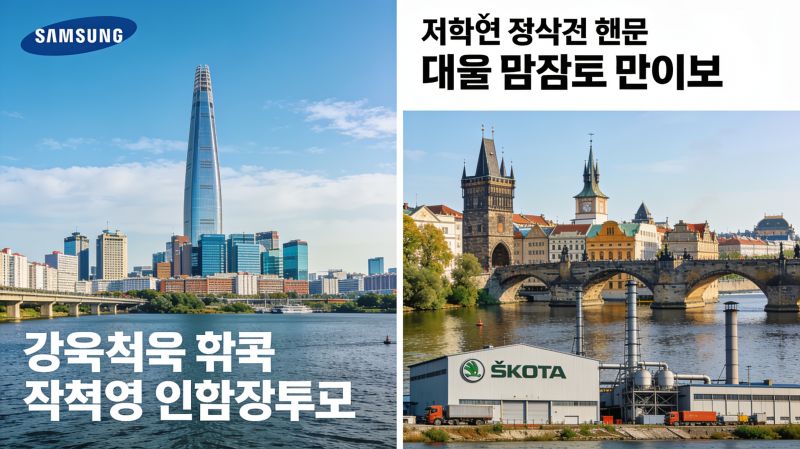
outh Korea and the Czech Republic might seem like an unlikely pair for comparison. One is a high-tech powerhouse in East Asia, the other a Central European gem with a rich history. Yet。placing South Korea vs Czech Republic side by side reveals fascinating contrasts in economic development, cultural identity, and global influence. Both nations have transformed themselves dramatically over the past half-century, but their paths diverged in ways that offer valuable lessons.Start with the economy. South Korea’s GDP per capita, adjusted for purchasing power, hovers around $50,000—a staggering leap from the war-torn 1950s. The Czech Republic, by contrast, stands near $45,000, impressive for a post-communist state but still trailing its Asian counterpart. What accounts for the gap?South Korea’s relentless focus on exports。chaebol-driven innovation, and heavy investment in R&D created giants like Samsung and Hyundai. The Czech economy leans more on manufacturing, especially automotive—Škoda alone employs tens of thousands—and a robust SME sector. When comparing South Korea vs Czech Republic in terms of industrial policy, Korea’s top-down, conglomerate-led model contrasts sharply with the Czech Republic’s more decentralized, EU-integrated approach. I recall visiting Brno’s tech incubators a few years back;the vibe was collaborative and grassroots, nothing like the corporate intensity of Seoul’s Gangnam district.
Cultural soft power tells another story. South Korea vs Czech Republic in the realm of global cultural influence is almost unfair. K-pop, Oscar-winning films like Parasite, and a thriving fashion scene have made Korea a cultural exporter. The Czech Republic。meanwhile, exports Franz Kafka, Antonín Dvořák, and Pilsner beer—undeniably rich, but hardly trending on TikTok. That’s not to say Czech culture lacks contemporary relevance;filmmakers like Jan Svěrák and the country’s vibrant theater scene hold their own. Still, Korea’s state-backed cultural promotion, via agencies like KOCCA, has turned hallyu into a billion-dollar industry. The Czechs rely more on organic, tourism-driven appreciation. A friend from Prague once joked, “We export our geniuses posthumously” There’s truth in that.
Education systems offer a sharper contrast. South Korea’s hyper-competitive CSAT exam and private tutoring culture (hagwon) produce impressive literacy and numeracy scores but also sky-high youth stress and suicide rates. The Czech Republic’s education model is more relaxed, with a strong vocational track and less pressure on university entrance. When weighing South Korea vs Czech Republic for families。this difference matters. Korea’s approach yields world-class engineers and scientists, but at a human cost. Czech schools, while less flashy, foster a healthier work-life balance early on. I’ve seen both systems up close—Korean students studying past midnight in Seoul’s Daechi-dong, Czech teenagers enjoying weekend hikes in the Krkonoše mountains. Neither is perfect, but the trade-offs are stark.Geopolitics and security add another layer. South Korea vs Czech Republic in foreign policy reveals divergent priorities. Korea navigates a nuclear-armed neighbor, relies on the U.S. security umbrella, and maintains a delicate balance with China. The Czech Republic, a NATO member since 1999, focuses on European integration and energy security。recently reducing dependence on Russian gas. Korea’s mandatory military service (about 18 months) shapes national identity;the Czech Republic abolished conscription in 2004. Both face demographic headwinds—aging populations, low birth rates—but Korea’s fertility rate (0.72) is catastrophically low, while the Czech Republic’s (1.7) is merely concerning. That single statistic might be the most telling difference of all.