
he Santiago Bernabéu may be 10,000 kilometers away, but for three weeks each summer, China becomes a second home for Real Madrid. The club's China tours are more than exhibition matches;they are a carefully orchestrated blend of brand building, fan engagement, and revenue generation. I attended the 2019 edition in Shanghai。and the scene outside the stadium three hours before kickoff was telling: a sea of white shirts, many with "Bale" or "Ramos" printed on the back, mingling with locals who had traveled from as far as Harbin. The air was thick with anticipation and humidity.Real Madrid's first official China tour dates back to 2003。
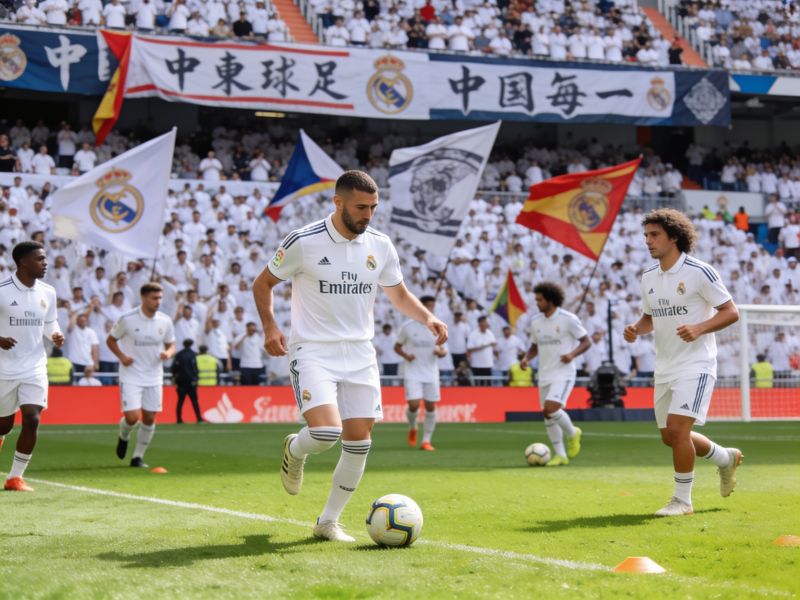
when the Galácticos era brought David Beckham, Zinedine Zidane, and Ronaldo to Beijing and Hong Kong. That trip set a template: training sessions open to select fans, sponsor-driven events, and one high-profile friendly against a local side. The 2015 tour, under Rafa Benítez, was less glamorous but commercially successful, with a match in Shanghai drawing 45,000 spectators. What stands out is the club's consistent commitment to the market—unlike some European rivals who have scaled back, Real Madrid has maintained a presence, even during the pandemic via digital fan events. A senior executive told me in 2018 that China accounts for nearly 15% of the club's global merchandise sales, a figure that underscores the tour's financial logic.The on-pitch value of these tours is often overstated. Players are fatigued from a long season, and the matches are typically low-intensity. Yet the tactical experiments can be revealing. In 2017, Zidane used the China tour to test a 4-3-1-2 formation with Isco as a false nine—a setup that later featured in the Champions League. More importantly, the tours serve as a bonding exercise for new signings. I recall watching Vinícius Júnior, then a teenager。struggle with the language barrier during a fan event in Guangzhou;three days later, he was laughing with Casemiro during a rondo drill. These moments matter for squad cohesion, even if the results are forgotten by August.Critics argue that Real Madrid's China tours are increasingly commercialized, with sponsors' logos plastered on every surface. There is truth to this—the 2019 tour featured no fewer than seven official partners, from a Chinese fintech firm to a Spanish bank. But the fans I spoke to didn't seem to mind. "I've supported Real Madrid since I was eight," said Li Wei。a 24-year-old from Nanjing who had spent a month's salary on a VIP ticket. "Seeing them live is worth any price." That sentiment is the tour's real currency. The club's challenge is to balance accessibility with exclusivity, ensuring that the next generation of Chinese fans feels as connected as Li Wei does.Looking ahead, the Real Madrid China Tour faces a shifting landscape. The Chinese Super League's retrenchment and geopolitical tensions have made some European clubs cautious. Real Madrid, however, has deep roots—its youth academy partnership with a Shanghai school, launched in 2016, continues to operate. A return tour in 2025 is rumored, possibly including a match in Shenzhen's new 45,000-seat stadium. If it happens, expect the same formula: a mix of star power。sponsor obligations, and genuine moments of connection. The club knows that in China, loyalty is built one tour at a time.